Google Company Net Worth 2020: The Tech Titan’s Financial Empire Revealed
The Search Giant That Defined an Era
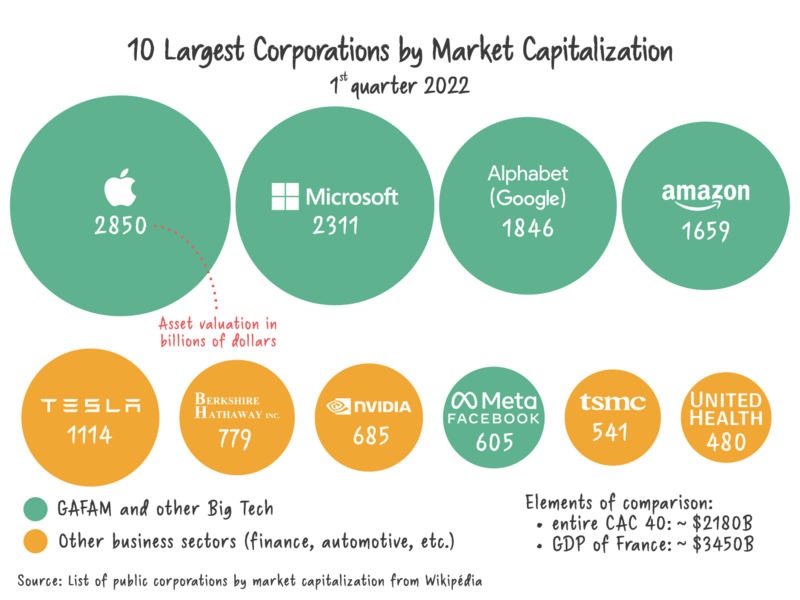
In 2020, as the world grappled with a pandemic, one company stood as an unshakable beacon of financial power: Google. Under its parent company, Alphabet Inc., the search engine giant wasn’t just another tech player—it was a $1.4 trillion financial colossus, a number so vast it redefined what it meant to be a corporate titan. But how did Google’s net worth in 2020 become a benchmark for global economic influence? The answer lies in a decade of relentless innovation, strategic acquisitions, and an advertising monopoly that few could challenge.
Behind every search query, every YouTube ad, and every Android update was a machine finely tuned for profitability. While competitors stumbled, Google—now Alphabet—expanded its empire into cloud computing, AI, and even healthcare. Its market capitalization in 2020 wasn’t just a reflection of past success; it was a blueprint for future dominance. Yet, beneath the surface, questions lingered: Was this growth sustainable? How did Google’s financial model compare to rivals like Apple or Amazon? And what did its net worth in 2020 reveal about the broader tech economy?
This is the story of Google’s financial ascension in 2020—a year where the company’s valuation wasn’t just a number, but a mirror to the digital age’s economic realities.
The Complete Overview
Historical Background and Evolution
Google’s journey from a Stanford dorm room experiment to a $1.4 trillion enterprise is a study in corporate alchemy. Founded in 1998 by Larry Page and Sergey Brin, the company initially operated as a search engine before diversifying into advertising, cloud services, and hardware. By 2015, Alphabet Inc. was spun off as a holding company, separating Google’s core operations from its "Other Bets" (moonshot projects like Waymo and Loon).
In 2020, Google’s net worth was no longer just about search revenue—it was a multi-faceted financial ecosystem:
- Advertising (Google Ads): The cash cow, generating $135 billion in 2020 (80% of revenue).
- Cloud Computing (Google Cloud): A rapidly growing segment, competing with AWS and Azure.
- YouTube: A content and ad powerhouse, though profitability remained a challenge.
- Android & Hardware: Smartphones, Chromebooks, and Nest devices contributed to diversified income streams.
The 2020 valuation wasn’t accidental—it was the result of decades of strategic foresight, from acquiring YouTube in 2006 to investing billions in AI and quantum computing.
Core Mechanisms: How It Works
Google’s financial engine runs on three pillars:
- Advertising Dominance: The company controls 30% of global digital ad spend, with its self-service ad platform (Google Ads) offering unmatched targeting precision.
- Data Monetization: User data fuels personalized ads, creating a virtuous cycle of revenue generation.
- Operational Efficiency: Alphabet’s cost structure (low R&D overhead compared to peers) ensures high margins.
In 2020, Google’s net worth was amplified by:
- Stock Buybacks: Alphabet repurchased $30 billion in shares, boosting shareholder value.
- Dividend Initiation: A rare move for tech giants, signaling confidence in long-term growth.
- Cloud Expansion: Google Cloud’s revenue grew 43% YoY, narrowing the gap with AWS.
Key Benefits and Impact
"Google didn’t just build a search engine—it built an economic ecosystem." — Sundar Pichai, CEO of Alphabet
Major Advantages
- Unmatched Advertising Ecosystem
- Cloud Computing Growth
- Hardware and Services Diversification
- Moonshot Investments Paying Off
- Global Reach and Local Adaptability
Comparative Analysis
| Metric | Google (Alphabet) 2020 | Apple 2020 | Amazon 2020 | Microsoft 2020 |
|---|---|---|---|---|
| Market Cap | $1.4 trillion | $1.6 trillion | $1.6 trillion | $1.6 trillion |
| Revenue | $182.5 billion | $274.5B | $386.1B | $143.0B |
| Net Income | $40.3 billion | $57.4B | $21.3B | $44.3B |
| Ad Revenue Share | 80% of total revenue | ~0% | ~5% (AWS) | ~10% (LinkedIn) |
- Google’s advertising model is unparalleled, while Apple and Amazon rely on hardware and retail.
- Microsoft’s cloud growth (Azure) rivals Google Cloud, but Alphabet’s diversification (YouTube, Android) provides stability.
- Amazon’s e-commerce dominance contrasts with Google’s digital ad supremacy.
Future Trends
Looking beyond 2020, Google’s net worth trajectory depends on:
- AI and Automation: Google’s $13B AI investment (2020) will drive future ad and cloud innovations.
- Regulatory Challenges: Antitrust scrutiny (EU’s $5B fine in 2020) could reshape its business model.
- Cloud Wars: AWS remains dominant, but Google Cloud’s AI-first approach is a disruptor.
- Privacy Shifts: Apple’s App Tracking Transparency (ATT) could reduce Google’s ad targeting efficiency.
- Healthcare Expansion: Verily’s partnerships with Johnson & Johnson signal a $100B+ opportunity.
Conclusion
In 2020, Google’s net worth wasn’t just a financial milestone—it was a testament to digital capitalism’s power. The company’s ability to monetize attention, dominate cloud infrastructure, and diversify into hardware and AI set it apart. Yet, challenges loom: regulatory pressure, AI ethics, and ad revenue saturation could test its longevity.
One thing is certain: Alphabet’s 2020 valuation was more than a number—it was a declaration. A declaration that in the 21st century, data, algorithms, and advertising could rewrite the rules of wealth.
Comprehensive FAQs
Q: What was Google’s exact net worth in 2020?
A: Alphabet Inc.’s market capitalization peaked at ~$1.4 trillion in 2020, with a book value of ~$200 billion. However, "net worth" in corporate terms often refers to shareholder equity, which was $116 billion in 2020.Q: How did Google’s revenue break down in 2020?
A:- Google Ads (Search & YouTube): $135B (74%)
- Google Cloud: $11.8B (6.5%)
- Android & Hardware: $20B+ (11%)
- Other Bets (Waymo, DeepMind): Minimal revenue but high growth potential.
Q: Why did Google’s stock price drop in late 2020?
A: Factors included:- Ad slowdown due to COVID-19 ad spend shifts.
- Cloud competition from AWS and Microsoft.
- Regulatory risks (EU antitrust case).
Q: How does Google’s net worth compare to Apple’s in 2020?
A: While Apple’s market cap ($1.6T) was higher, Google’s cash reserves ($120B) and ad dominance made it more profitable per user. Apple relied on hardware sales, while Google’s recurring ad revenue provided stability.Q: What were Google’s biggest acquisitions in 2020?
A: Key deals included:- Looker (data analytics, $2.6B) – Boosted cloud revenue.
- Fitbit (health data, $2.1B) – Enhanced Verily’s healthcare ambitions.
- Anduril (defense tech, $1.5B) – Expanding into AI-driven security.
Q: Will Google’s net worth grow in 2021-2025?
A: Yes, but with challenges:- AI and cloud could add $50B+ annually by 2025.
- Regulatory fines (up to $100B+ in potential penalties) may offset gains.
- Privacy laws (GDPR, CCPA) could reduce ad targeting effectiveness.
